

How to Change a Lamp Shade (And Pick the Right One): The Complete UK Guide
Changing a lamp shade is one of the quickest, cheapest room transformations you can make — no electrician, no tools, no drama. But walk into any lighting shop and the sheer variety of fittings, sizes and styles can make it feel far more complicated than it needs to be. This guide cuts through the confusion: what fitting you need, how to measure correctly, how to actually swap the shade in under ten minutes, and which styles suit which rooms.
Why Bother Changing Your Lamp Shade?
Most people inherit the lamp shades that came with their light fittings and never question them. But a shade has an enormous effect on the quality, warmth, and direction of light in a room — and on the room's overall feel.
A cracked, yellowed, or simply dated shade is one of the most common reasons a room feels tired without anyone being able to explain exactly why. Replacing it with a fresh glass pendant shade or a crisp metal industrial cone can transform the atmosphere in minutes — for as little as £8–£17.
A new lamp shade costs less than a bunch of flowers and lasts years. It's the most underrated room refresh in interior design.
Step 1: Identify Your Fitting Type
Before you buy anything, you need to know what fitting your existing light uses. There are three common types in UK homes:
E27 Edison Screw
A shade with a central hole that screws directly onto the lamp holder via a threaded ring nut. Standard on most pendant ceiling lights and the most popular for decorative glass and metal shades.
B22 Bayonet Cap
The push-and-twist fitting common in older UK homes. The shade fits over the bulb holder. Less common for replacement shades but adapters are available.
Easy Fit / Clip-On
The shade clips directly onto the bulb using a small plastic ring inside the shade. No ring nut required. Quick to fit but only suitable for LED bulbs (never high-wattage incandescent).
Large Ceiling Shade
A shade that attaches to a ceiling rose or track via a large ring fitting. Common for flush ceiling lights and semi-flush fittings in hallways and bedrooms.
Quick check: Look at the top opening of your current shade. If it has a small central hole (under 4cm diameter) with a threaded collar, it's an E27 or B22 pendant fitting. If the hole is large enough to pass over the bulb entirely, it's an easy fit or ceiling rose shade.
Step 2: Measure Before You Buy
The most common buying mistake is choosing a shade that looks right on screen but is completely wrong in proportion once it arrives. Here's how to get the sizing right every time.
Shade Size Guide by Room & Use
- Diameter (width): The measurement across the widest point of the shade. The most important number.
- Height / Drop: How tall the shade is. For glass shades, this affects how much of the bulb is visible.
- Fitter opening: The diameter of the hole at the top where the shade attaches to the holder. For E27, this is typically 40–45mm.
The Ceiling Height Rule
A rough guide that works well: your shade's diameter in centimetres should be roughly one tenth of your ceiling height in centimetres. So for a 2.5m ceiling (250cm), a shade of 25cm diameter is a solid starting point. Go slightly larger for statement pieces, slightly smaller for minimalist looks.
Step 3: How to Actually Change the Shade
Here's the good news — for a standard E27 pendant light, swapping a lamp shade takes under five minutes and requires no tools whatsoever.
Turn off the light and let it cool
Switch the light off at the wall. If the bulb has been on, wait at least 10 minutes before touching the shade — glass and metal shades retain heat. LED bulbs cool faster than older halogen types.
⚠ Safety first — always work with the power offUnscrew the ring nut (lock ring)
On most E27 pendant shades, a small threaded ring nut sits at the top of the shade, around the lamp holder. Turn it anti-clockwise to loosen. Some are finger-tight; others may need a gentle grip with a cloth.
Slide the old shade off
Once the ring nut is removed, the shade simply slides down off the lamp holder. Keep hold of it — glass shades can be heavy. Set it aside carefully on a padded surface.
Slide the new shade onto the holder
Thread the new shade's opening up over the lamp holder. The shade should sit flush and level. If it's not sitting straight, check that the shade ring is centred on the holder.
💡 Now is a great time to swap the bulb tooScrew the ring nut back on
Thread the ring nut back onto the lamp holder clockwise, tightening until the shade is held firmly in place. Finger-tight is usually sufficient — don't over-tighten, particularly on glass shades.
Switch on and admire
Turn the light back on and check the shade sits level and looks right. Step back and enjoy the transformation. The whole job from start to finish should take under 10 minutes.
When do you need an electrician? Only if you are replacing the entire fitting, changing the wiring, or working on the ceiling rose connections. Simply swapping a shade — as described above — involves no electrical work whatsoever.
Choosing the Right Style: A Room-by-Room Guide
| Shade Style | Best Rooms | Effect | At DC Voltage |
|---|---|---|---|
| Metal Cone / Bowl | Kitchen, hallway, office | Directs light downward, clean and functional | From £8.39 |
| Ribbed Glass Dome | Bedroom, living room, dining | Diffuses warm ambient glow all around | From £8.69 |
| Smoked / Tinted Glass | Living room, dining, bar area | Moodier, dimmer, very on-trend for 2026 | From £8.69 |
| Embossed / Floral Glass | Bedroom, reading nook, vintage interior | Warm, decorative, cottage or vintage aesthetic | From £14.29 |
| Cage / Drum Guard | Industrial kitchens, hallways, bars | Exposes the filament bulb, raw industrial feel | From £12.79 (2-pack) |
| Crystal / Faceted Glass | Living room, dining room, entrance | Sparkle and luxury without the chandelier price | From £9.51 |
| Crackle / Textured Glass | Bedroom, living room, vintage interior | Unique texture, warm diffused glow | From £8.69 |
The Metal vs Glass Decision
The simplest way to choose: metal shades direct light (good for task lighting, kitchen islands, reading). Glass shades diffuse light (good for ambient rooms — bedrooms, living rooms, dining rooms). If you want warmth and atmosphere, glass wins. If you want focus and function, metal wins.
Shop DC Voltage Lamp Shades
All the shades below fit standard E27 lamp holders — ready to swap in minutes. Free UK delivery on orders over £25.
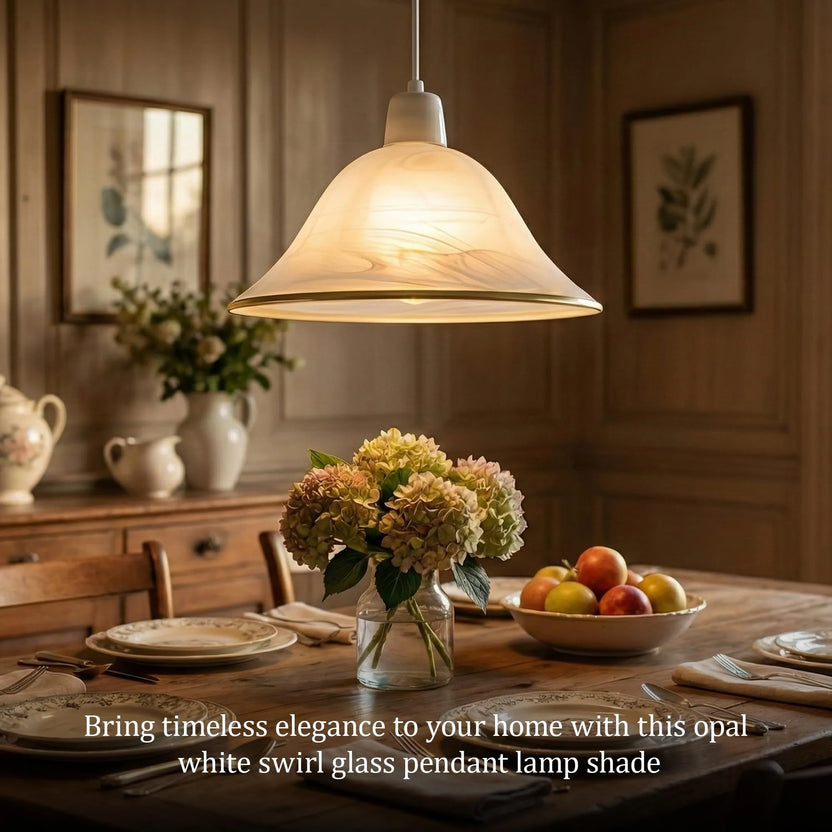
White Swirl Glass Pendant Lamp Shade
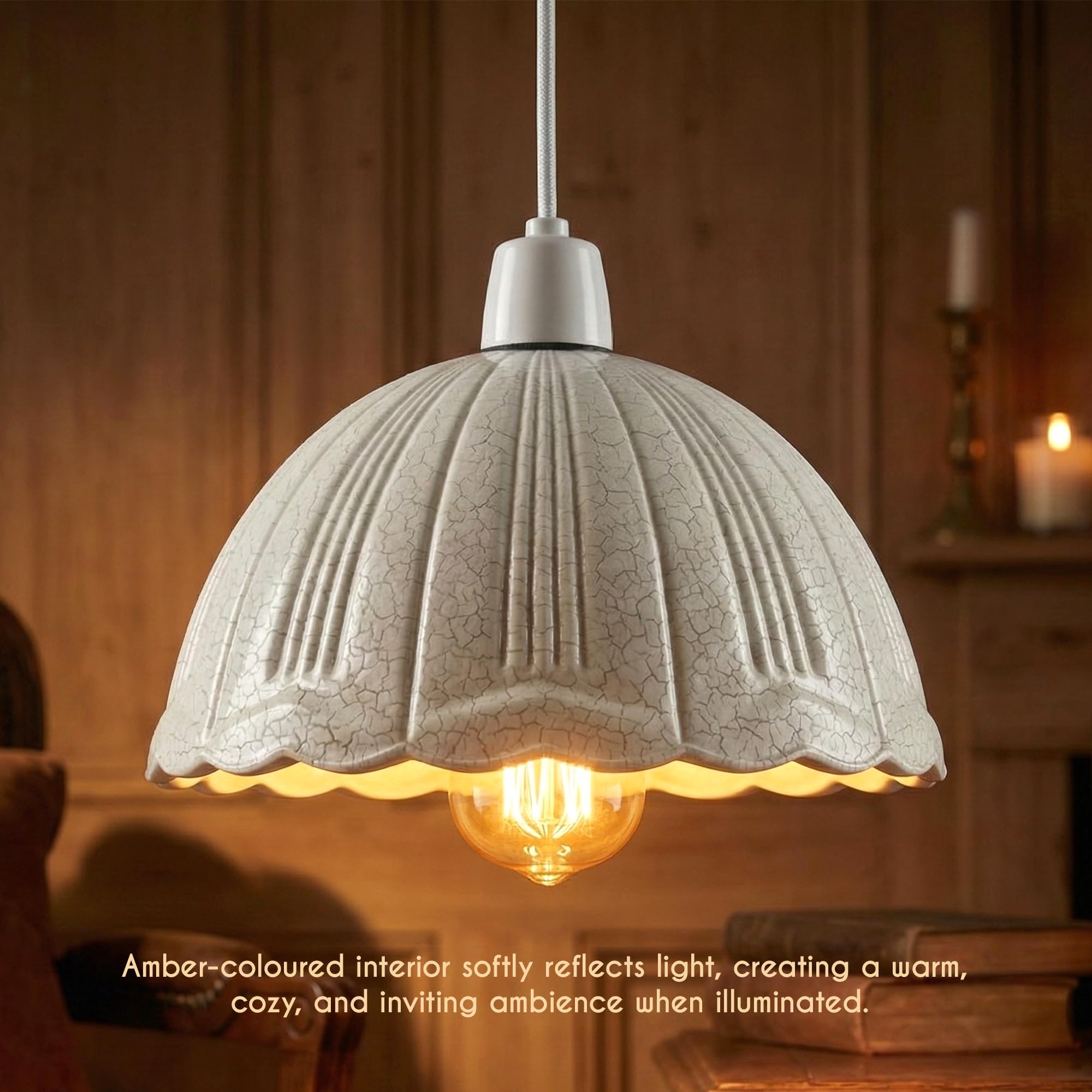
Vintage Crackle Glass Dome Lamp Shade — 18cm White
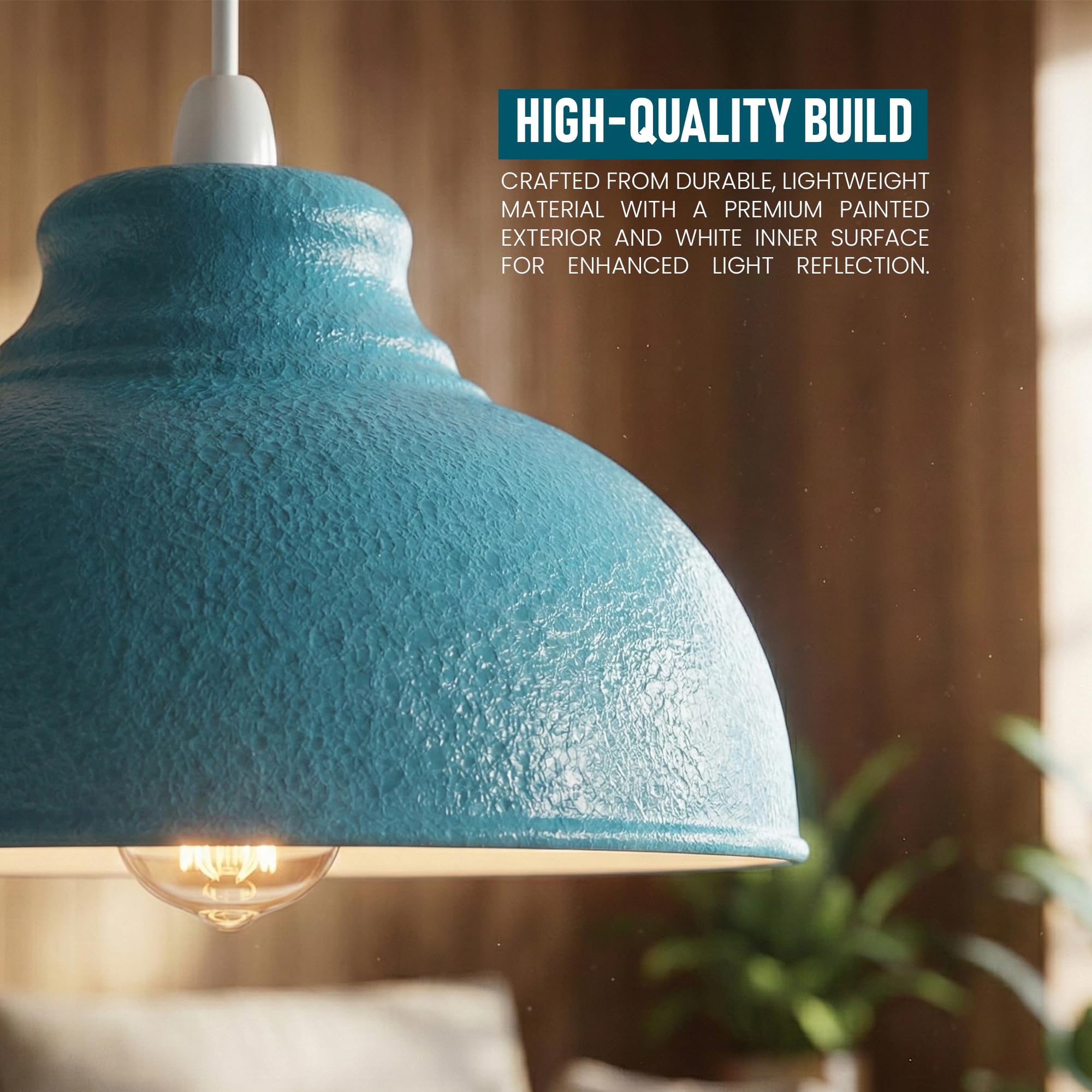
Curvy Metal Lamp Shade — 29cm Easy Fit Pendant
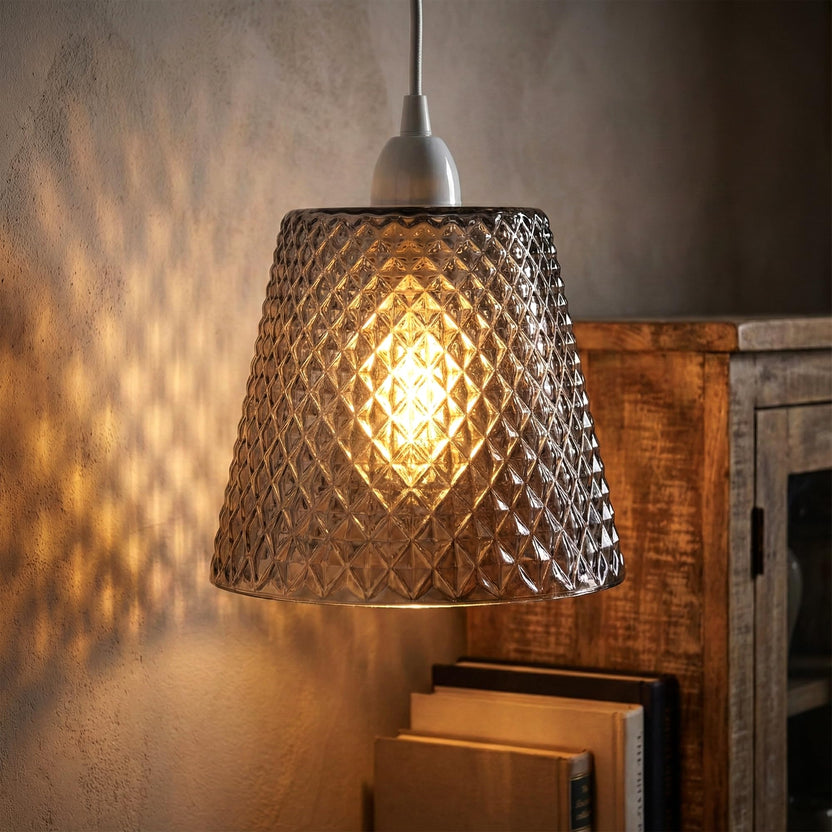
Smoked Grey Glass Diamond Cone Pendant Shade — 16cm
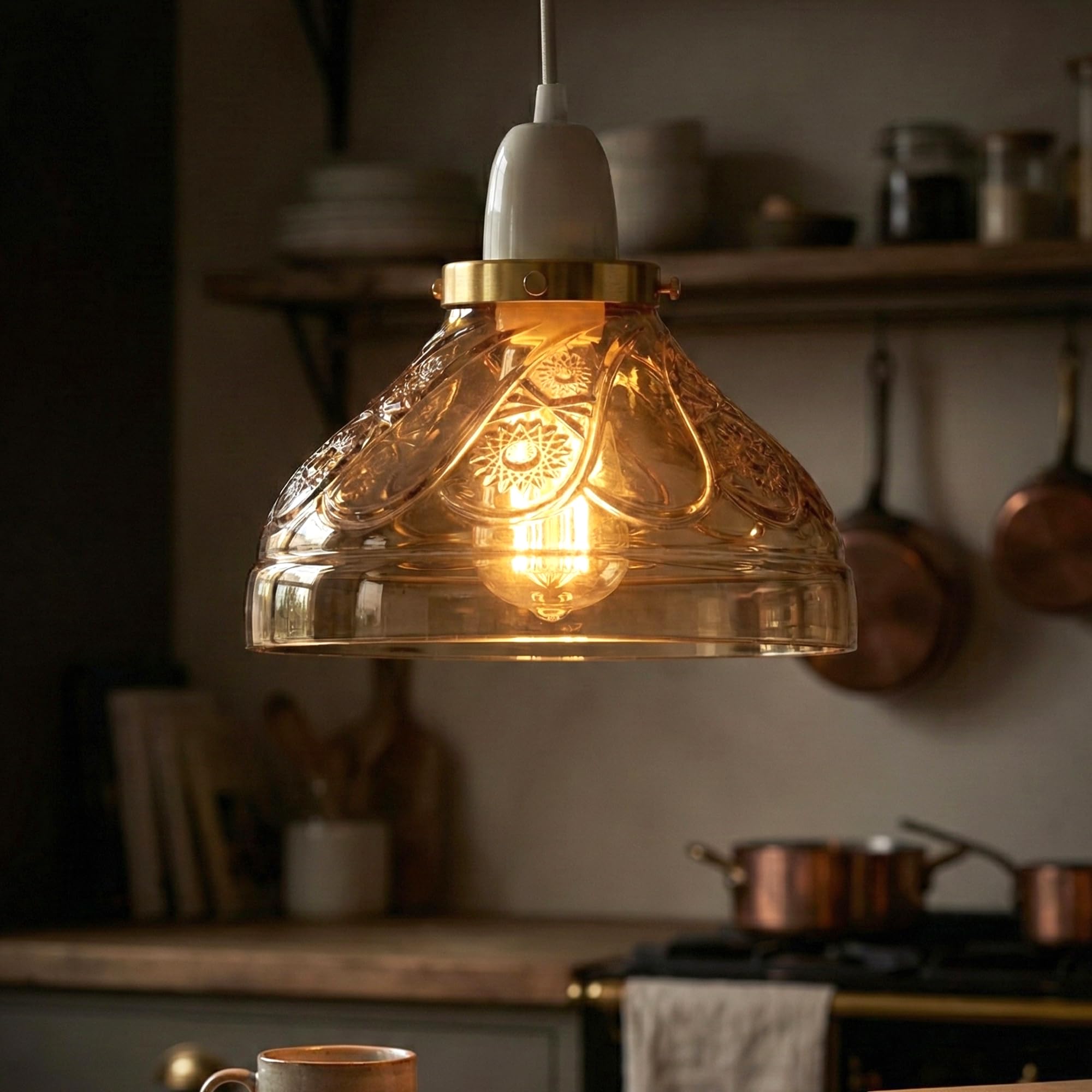
Vintage Glass Lamp Shade — Embossed Floral E27 Pendant
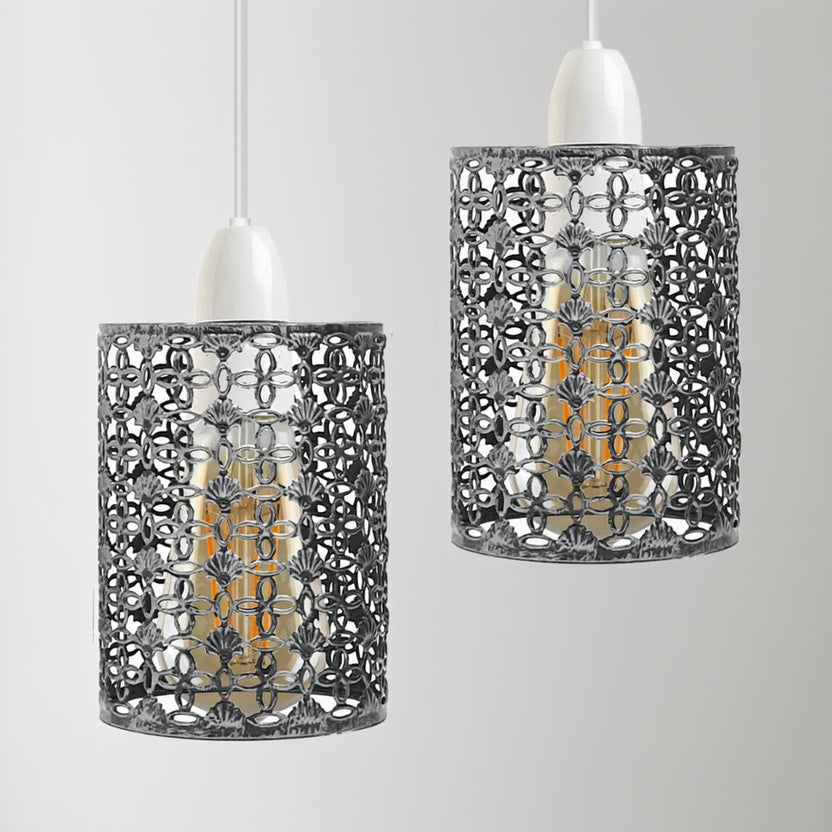
Industrial Metal Bulb Guard Drum Cage Lamp Shade
Don't Forget the Bulb
While the shade is off, it's the perfect time to upgrade the bulb too. For glass shades especially, the bulb is visible and makes a huge difference to the overall look. A standard cool-white LED will look completely wrong in a vintage ribbed glass dome — an amber filament bulb transforms it.
- Clear glass dome / ribbed glass: E27 LED filament, 2200K–2700K — the warmer the better, the bulb will be visible
- Smoked / tinted glass: E27 LED filament, globe or spiral shape, 2700K — the tint deepens the warmth beautifully
- Opaque metal cone: E27 standard LED, 2700K–3000K — the bulb is hidden so focus on lumens over aesthetics
- Cage / drum guard: E27 filament bulb, any decorative shape (globe, teardrop, tubular) — the bulb is the main feature
- Floral / embossed glass: E27 candle filament or globe, 2200K — the texture catches and scatters the warm light beautifully
Ready to Refresh Your Lighting?
Browse DC Voltage's full range of lamp shades, LED filament bulbs and vintage braided cables — all delivered across the UK & Europe. Free delivery on orders over £25.
Shop Lamp Shades Shop LED BulbsFrequently Asked Questions