
-
LED Driver 18W 250mA Constant Current Transformer for Downlights & Ceiling Fittings | DC Voltage ~1167 -
Universal Regulated DC Power Supply 12V 60A 720W ~1057 -
DC12V LED Driver Switching Power Supply IP20 Transformer for LED Strip 15W - 480W ~1072 -
DCVOLTAGE IP20 36-50W Constant Current LED Driver, 300mA ~1069 -
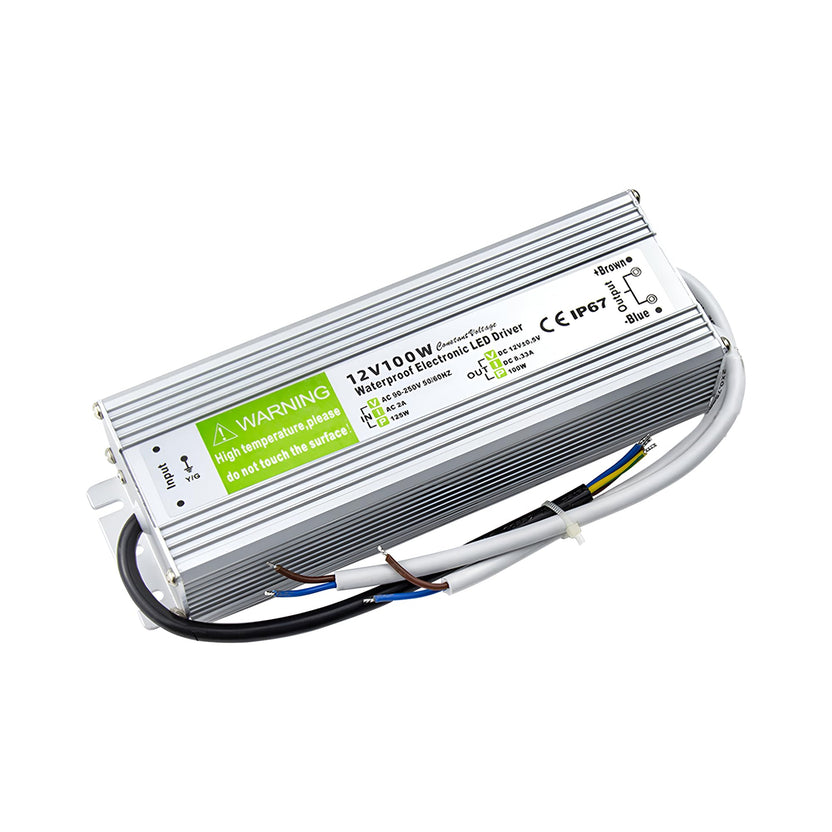
12V 100W IP67 Waterproof LED Driver Power Supply Transformer ~1067 -
IP45 Outdoor LED Power Supply Transformer 400W 12V DC ~1058 -
Universal Regulated DC Power Supply 12V 30A 300W ~1055 -
Waterproof LED Power Supply Driver 60W DC24V ~1053 -
DC 24V Universal Regulated Switching Power Supply LED 3D Printer CCTV New UK ~1051 -
Universal Regulated Switching Power Supply 200W ~1050 -
12V LED Driver Power Supply 24W–480W for LED Strip Lighting ~1009 -
24V 24W 1A LED Driver – IP20 Constant Voltage Power Supply ~1008 -
5V DC Switching Power Supply – IP20 LED Power Supply for Indoor Use ~1007


LED Drivers & Transformers: Complete UK Guide to 12V and 24V LED Power Supplies
An LED driver is a specialised self-contained power supply that regulates the electrical current and voltage required for light-emitting diodes (LEDs) to operate safely, efficiently, and without thermal runaway. Unlike traditional incandescent or halogen bulbs that connect directly to standard 230V alternating current (AC) mains electricity, LEDs are low-voltage semiconductors requiring precisely smoothed direct current (DC) or constant amperage.
Choosing the correct LED power supply is the single most critical factor in determining the lifespan, brightness, and operating stability of an LED lighting installation. Using an incompatible transformer can lead to immediate failure, visible strobing, audible buzzing, premature thermal degradation, or permanent damage to the LED chips. This technical guide explains the differences between LED drivers and transformers, outlines how to calculate wattage accurately, compares 12V and 24V systems, and details how to select the right unit from the DCVOLTAGE LED Transformers & Drivers Collection.

Quick Answer: Key Takeaways for Sizing and Selection
- Voltage Matching: Constant-voltage LED strip lights require an exact voltage match. You must power a 12V LED strip with a 12V DC driver, and a 24V strip with a 24V DC driver.
- The 80% Headroom Rule: Always add a minimum 20% safety margin to your calculated wattage. To power an LED run that consumes 50W, choose a driver rated for at least 60W to 65W to prevent thermal stress and premature capacitor failure.
- 12V vs 24V: 24V DC is recommended for continuous runs over 5 metres because higher voltage halves the electrical current, significantly reducing resistive voltage drop and uneven brightness. 12V DC is ideal for short runs, vehicle installations, or where short cut-point intervals are required.
- Constant Voltage vs Constant Current: LED strips, tape, and parallel modules require constant voltage (fixed 12V or 24V). Individual high-power architectural downlights and commercial spotlights wired in series require constant current (fixed mA output, such as 350mA or 700mA).
- Dimming Method: If using a standard UK wall dimmer, you require a mains-dimmable driver compatible with trailing-edge (ELV) phase dimming. Alternatively, power non-dimmable drivers continuously and install a secondary-side low-voltage controller between the driver and the LED tape.
12V vs 24V LED Drivers: Which Voltage Do You Need?
When selecting a constant-voltage system for LED strip lights, the choice between 12V and 24V depends primarily on run length, installation scale, and cut-point requirements.
Why 24V Is Recommended for Longer Runs (Voltage Drop Physics)
Electrical power is the product of voltage and current (P = V × I). Because a 24V system operates at twice the voltage of a 12V system, it requires only half the current to deliver the identical wattage. According to Ohm's Law and the formula for voltage drop (Vdrop = I × R), halving the amperage through the thin copper traces of an LED strip reduces resistive voltage drop by half.
In practical installations, 12V LED tape typically experiences visible voltage drop beyond 5 continuous metres, causing the LEDs at the far end of the run to appear visibly dimmer and slightly warmer in colour temperature. By contrast, a 24V LED strip can run for 10 continuous metres from a single power injection point with uniform brightness along the entire length.
When to Choose 12V
Shorter custom runs under 5 metres (under shelving, display cabinets).
Applications requiring very short cut increments (cut every 25mm–50mm).
Automotive, marine, caravan, and battery-backed 12V DC off-grid systems.
When to Choose 24V
Room perimeter cove lighting and ceiling profiles exceeding 5 metres.
Commercial installations running multiple strips from one central driver.
High-wattage, high-density LED strips (such as dotless COB tape).
Comprehensive LED Driver Comparison Table
| Power Supply Type | Typical Application | Key Specifications to Check | Critical Compatibility Point |
|---|---|---|---|
| 12V Constant Voltage (CV) | Short LED strip runs (<5m), under-cabinet joinery, vehicle/caravan lighting. | 12V DC fixed output, total rated wattage (W), IP rating. | Strip must explicitly state 12V DC input. Do not exceed 5m on a single continuous feed without power injection. |
| 24V Constant Voltage (CV) | Medium-to-long LED tape runs (5m–10m), coving, commercial linear profiles. | 24V DC fixed output, total rated wattage (W), IP rating. | Strip must state 24V DC input. Connecting 12V tape to a 24V driver will instantly burn out the diodes. |
| Constant Current (CC) | Dedicated LED downlights, commercial ceiling panels, high-power COB spotlights. | Fixed output current (mA, e.g. 350mA/700mA), DC voltage output range (V). | Fittings must be wired in series. Output mA must match fixture rating exactly; total forward voltage must fit the driver's voltage range. |
Explore the DCVOLTAGE Range of Certified LED Power Supplies
DCVOLTAGE supplies an extensive range of commercial-grade, fully compliant LED drivers and low-voltage power supplies engineered for UK residential, architectural, and commercial projects. Browse our collections below to find the exact match for your installation:

24V LED Power Supplies
Designed for long-run LED tape, coving, and architectural linear lighting without voltage drop.
Browse Product
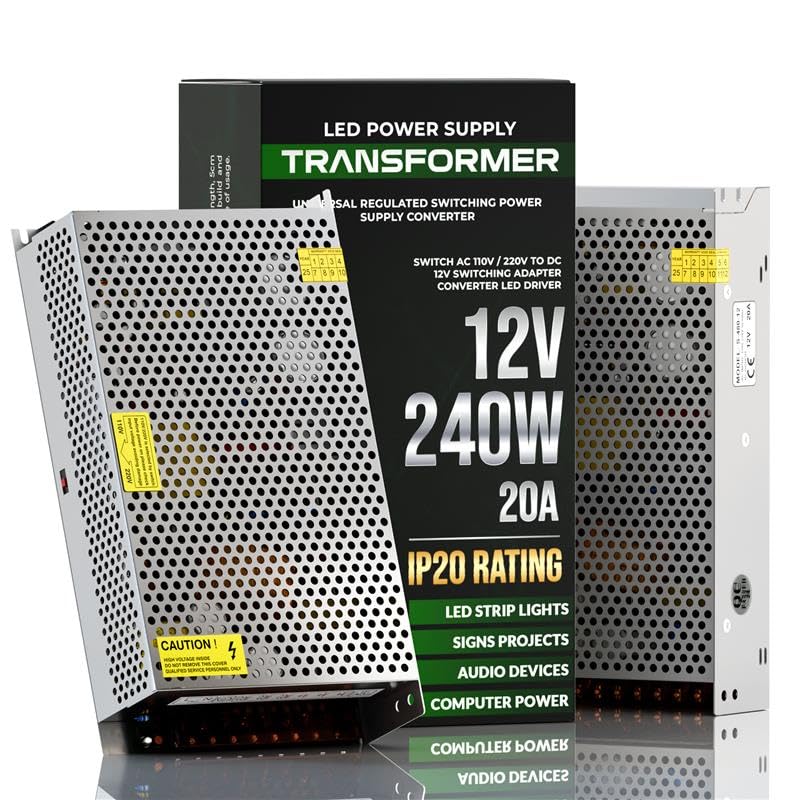
12V LED Drivers
Ideal for cabinet joinery, under-cabinet lighting, and bespoke short-run custom lengths.
Browse Product
FAQ
What is the difference between a 12V and 24V LED driver?+
A 12V LED driver provides a regulated 12V DC output, while a 24V LED driver provides a regulated 24V DC output. For the same electrical power, a 24V system requires approximately half the current of a 12V system, which can reduce resistive voltage drop. The maximum LED run length still depends on the LED strip, wattage, cable and power-feed arrangement.
What is a constant-current LED driver?+
A constant-current LED driver maintains a specified output current, such as 250mA, 300mA, 350mA or 700mA, while adjusting its output voltage within its operating range. It is designed for LED products that require regulated current, including certain downlights, LED modules and architectural lighting products.
What is an LED driver?+
An LED driver is a power supply designed to provide LEDs with the electrical conditions they require. Depending on the application, it converts mains electricity such as 230V AC into regulated low-voltage DC, such as 12V or 24V, or supplies a specified constant current in milliamps.
How do I choose the right LED driver wattage?+
Calculate the total wattage of all LEDs connected to the driver and choose a power supply with suitable capacity above the normal operating load. The exact required rating depends on the LED manufacturer's specifications and the intended application.
Can I use a 12V LED driver with a 24V LED strip?+
No. A 12V LED strip requires a compatible 12V constant-voltage power supply, while a 24V LED strip requires a compatible 24V supply. Always match the driver's output voltage to the voltage specified for the LED product.
What is the difference between constant-voltage and constant-current LED drivers?+
A constant-voltage driver maintains a fixed output voltage, such as 12V DC or 24V DC, and is commonly used with compatible LED strips. A constant-current driver maintains a specified output current, such as 300mA, and is used with LED products designed for regulated current. The two types are not interchangeable.
Can I use a dimmer with an LED driver?+
Only if the LED driver is specifically designed for dimming and is compatible with the chosen dimmer or control system. Depending on the driver, compatible methods may include TRIAC or phase-cut dimming, 0-10V or DALI control. Check the manufacturer's specifications before connecting a dimmer.
Subscribe to our emails
Be the first to know about new collections and special offers.